When assembling wire rope terminations, selecting the appropriate cable clamp is essential to maintain strength and safety. In this guide, you’ll learn how different clamp types perform, which materials withstand demanding environments best, and how to match each clamp to the load and application. You’ll also see how proper installation—spacing, torque, and inspection—directly impacts holding strength. By applying these principles, you can create secure, reliable wire rope connections on any jobsite.
When working with rigging or lifting equipment, it’s easy to confuse wire rope and cable. However, understanding the differences helps you make safer, smarter choices. Wire rope is stronger, more durable, and better suited for heavy-duty lifting, while cable provides flexibility and is ideal for lighter tension and control tasks. By knowing details like size, core type, construction, and performance, you’ll be better prepared to select the right product, avoid expensive mistakes, and keep your projects safe and efficient
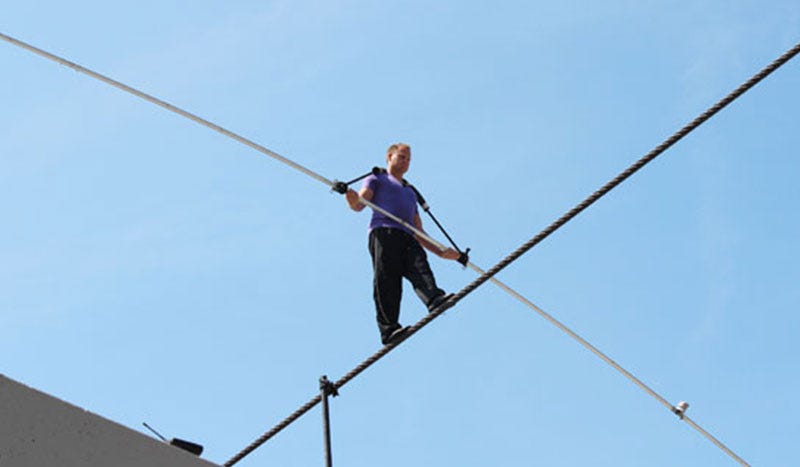
Hanes Supply’s wire rope and 16 Crosby 2 inch G-450 wire rope clips, to secure the tight rope cable, were used for Nik Wallenda “King of the High Wire” at the Niagara Falls casino as he practiced for his “Wallenda Walk Over The Falls” on June 15th 2012.
Hanes Supply Rigging Supporting Customers Around the Globe. An international contractor recently needed new tow cables for their support of the US Government Science Research at the North Pole. Per the attached pictures, Hanes fabricated 1 inch Wire Rope Assemblies to keep the fuel bladders, support equipment and supplies sliding along the frozen tundra of Greenland. Our rigging was delivered to the Air National Guard which flew the rigging along with other supplies to Greenland via C130 cargo planes.